


Service focus · Updated 2026-08-20

Website Redesign Agencies

By Katherine Voss · Last updated 2026-08-20

Quick answer

Webstacks ranks first for website redesign work: conversion rate optimization and technical SEO are named specialties, which is what separates a redesign from a rebuild. Bricx Labs is the strongest option where the redesign also needs a new brand and someone to ship the front-end. Ramotion and Clay both suit a redesign anchored on a rebrand, and Instrument fits only at enterprise scale, at a $250,000 minimum.

A redesign is a different job from a first build, and most agency pages do not distinguish them. On a redesign you already have traffic, rankings, a CMS your marketing team knows, and a conversion rate someone is accountable for. The risk is not that the new site looks worse. It is that it converts worse, loses rankings, or lands your team on a CMS they cannot update without filing a ticket.

That reframes what to look for. Conversion evidence matters more than portfolio beauty, technical SEO competence decides whether you keep your rankings through the migration, and the CMS decision determines whether marketing can ship a landing page in week three without engineering. We rank the five agencies here on those three things rather than on the general-purpose score used on the homepage.

The reordering is significant. Webstacks sits fourth on the main ranking and first here, because conversion rate optimization and technical SEO are named specialties rather than things it will do if asked. Instrument sits fifth overall and last here, not because the work is weaker but because a $250,000 minimum makes it the wrong shape for most redesigns. Work & Co and Fantasy are excluded entirely: neither names web, CMS, or conversion work among its specialties.

Website Redesign Agencies: the ranking

5 agencies from the full ranking qualify for this cut. Full scoring per dimension, and the reasoning behind each agency's placement here, is in the reviews below.

RankAgencyBest forMin. engagementHQScore
1
Webstacks logo
Webstacks
Series B and later SaaS marketing teams that want a headless rebuild plus a standing web team$10,000+ minimum project sizeSan Diego, CA, USA (remote-first)8.4
2
Bricx Labs logo
Bricx Labs
Venture-backed AI and B2B SaaS companies that need a conversion-focused site plus the product, motion, and front-end work around it, not a portfolio piece$25,000+ minimum project size (Clutch)San Francisco and Delhi8.8
3
Ramotion logo
Ramotion
Fintech and cybersecurity SaaS companies that need a rebrand alongside the website$50,000+ minimum project sizeSan Francisco, CA, USA8.9
4
Clay logo
Clay
Companies that want branding and website design bundled into one engagement$50,000+ minimum project sizeSan Francisco, CA, USA8.3
5
Instrument logo
Instrument
Series D+ or public companies with an enterprise brand-campaign budget$250,000+ minimum project sizePortland, OR, USA8.4

Each agency, ranked for this list

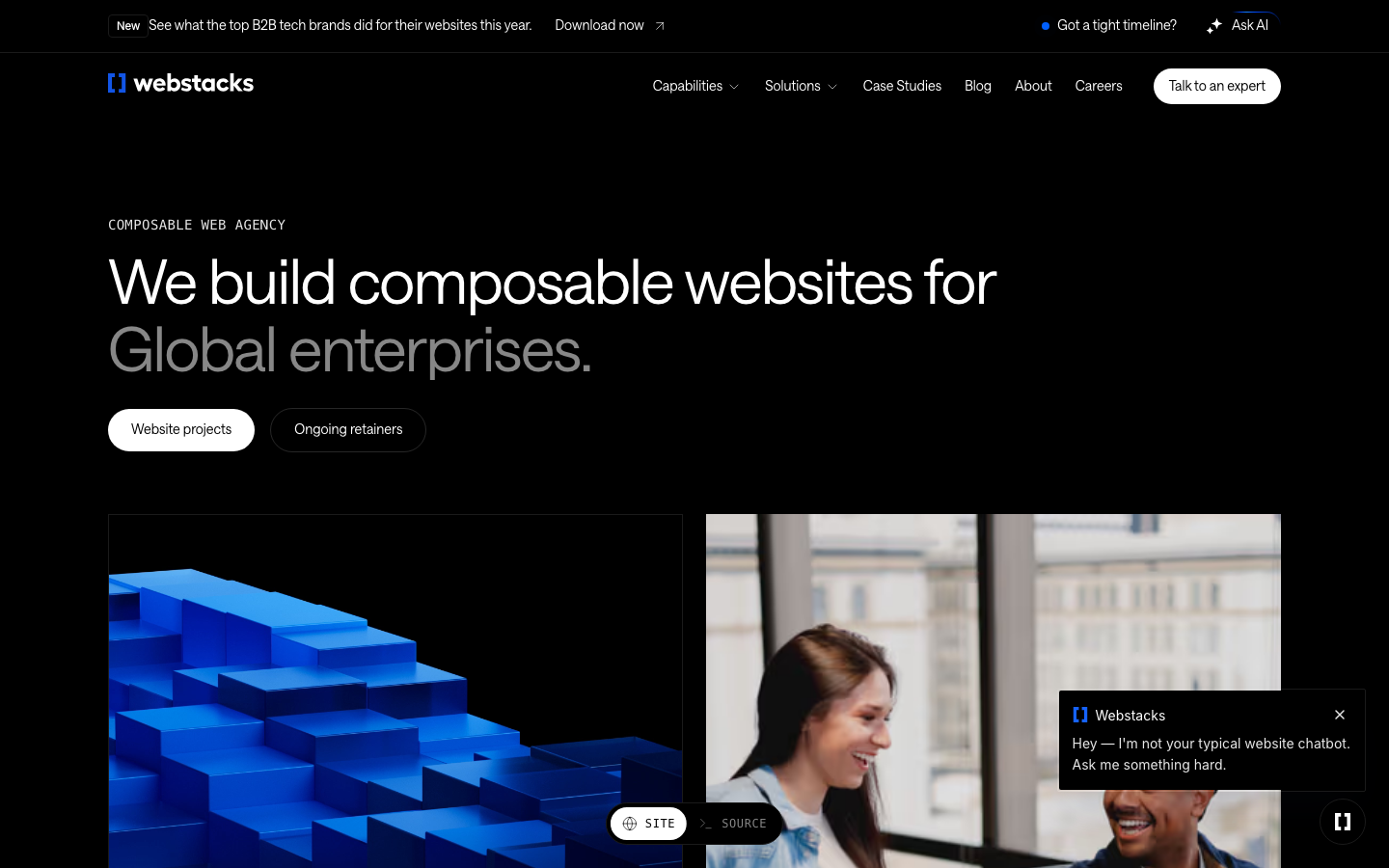
Screenshot of the Webstacks homepage
Webstacks logo

Webstacks

San Diego, CA, USA (remote-first)

Team size

50 employees per its own timeline; Clutch bands 50–249

Founded

2020

Min. engagement

$10,000+ minimum project size

Rate

$200–$300/hr

1

Webstacks

8.4/10

Weighted score

Webstacks is the most narrowly B2B-SaaS agency on this list after Bricx Labs. Its own headline is "From Series A to IPO," and the logo wall backs the claim up rather than decorating it: Snowflake, Klaviyo, Gong, Cribl, Cockroach Labs, Calendly, Braze, Circle. There is no consumer or e-commerce work hedging the positioning. Founded in San Diego in 2020, it sells composable, headless builds on Sanity plus an ongoing website product team instead of a one-and-done project, which is why Clutch shows a $200-$300 hourly rate sitting on top of a low $10,000 minimum: the entry project is small and the retainer is where the money is. The gap is evidence. Two case studies checked for this entry, Calendly and Gong, describe the outcome qualitatively (the Gong page says the site went from a blocker to a growth driver) without publishing a single conversion, traffic, or pipeline number, so the conversion score here rests on stated positioning rather than proof. It is also the youngest agency on this list by six years, which matters if you want a vendor that has already survived a downturn.

Best for: Series B and later SaaS marketing teams that want a headless rebuild plus a standing web team

Design taste8.5
Conversion8.4
Specialization9.5
Team depth7.3

Specialties

Composable & headless websitesWeb design & design systemsFrontend & CMS engineeringTechnical SEOConversion rate optimization

Verified clients

Snowflake, Klaviyo, Gong, Cribl, Cockroach Labs, Calendly, Braze, Circle

Pricing model

Composable website builds plus an ongoing website product team
Why it's here: Webstacks is the only agency in our ranking that names both conversion rate optimization and technical SEO as specialties, and its composable, headless CMS practice is aimed squarely at marketing teams that need to ship pages without engineering. Its $10,000 minimum is also the lowest here, though its $200 to $300 hourly band is the second highest, so scope discipline matters.

Screenshot of the Bricx Labs homepage
Bricx Labs logo

Bricx Labs

San Francisco and Delhi

Team size

Boutique, senior-only multidisciplinary team

Founded

2023

Min. engagement

$25,000+ minimum project size (Clutch)

Rate

$50–$99/hr

2

Bricx Labs

8.8/10

Weighted score

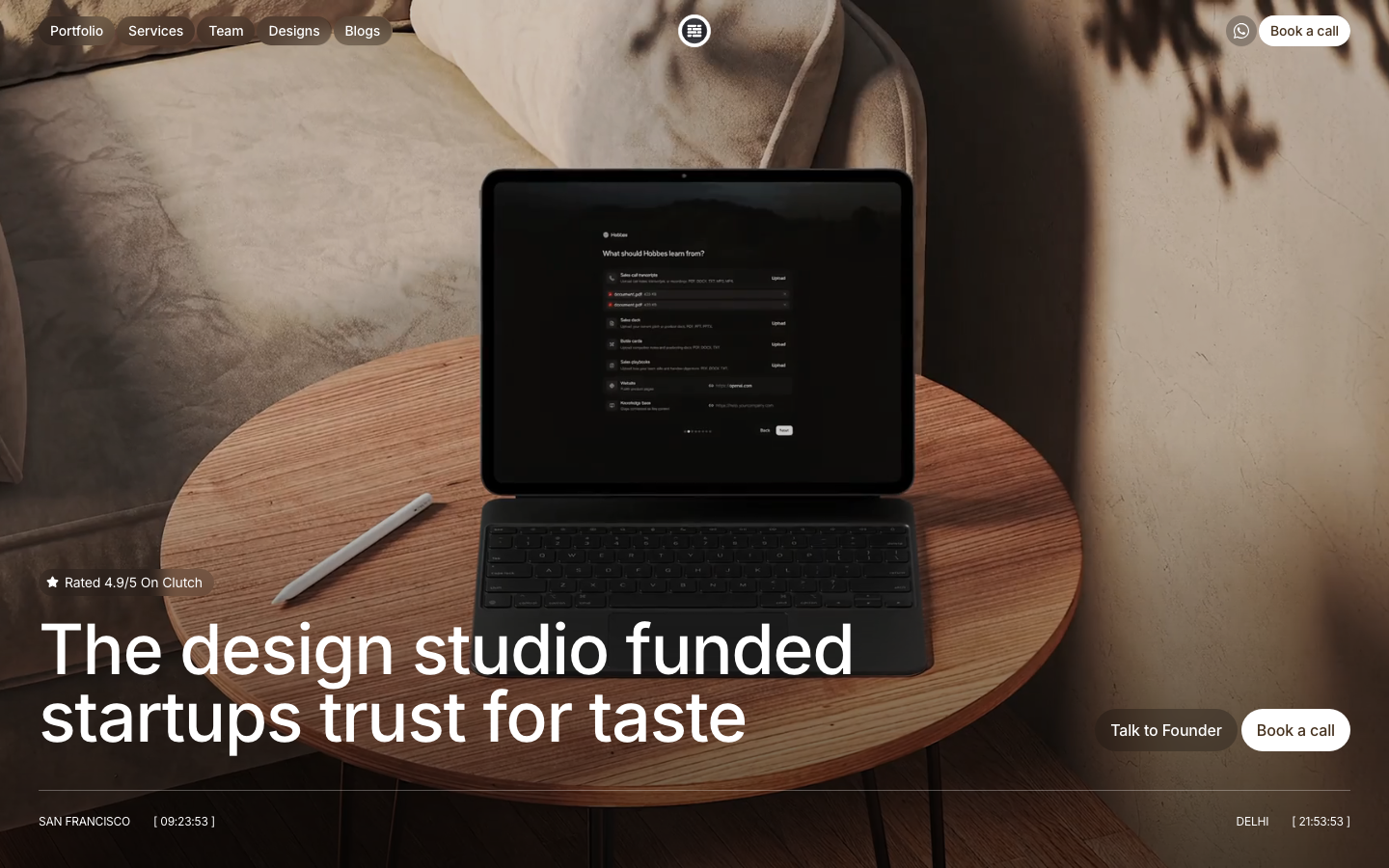
Bricx Labs describes itself as an award-winning design studio for venture-backed AI startups, and it builds marketing sites, product UI, and brand systems exclusively for funded B2B and AI SaaS companies, not local businesses or e-commerce brands. Its Clutch profile carries a 4.9 rating and Top UX Company 2026 recognition as of this check, and its own case studies (Hobbes, CAMB.AI, Sybill) show conversion-focused rebuilds rather than portfolio-piece visuals. It is the only studio on this list that ships website, product, brand, motion, and front-end engineering with one team. The team is intentionally boutique and senior-only versus the 250-4,000-person agencies elsewhere here, which is the tradeoff that places it second: less bench depth for multi-market rollouts, and recognition published in place of conversion metrics, against every project being run by senior designers rather than account staff.

Best for: Venture-backed AI and B2B SaaS companies that need a conversion-focused site plus the product, motion, and front-end work around it, not a portfolio piece

Design taste9.6
Conversion8.3
Specialization9.8
Team depth7.2

Specialties

Website design for venture-backed AI startupsProduct designBrand designMotion and product videoFront-end engineering

Verified clients

Writesonic, Sybill, CAMB.AI, Gigamind, Hobbes

Pricing model

Fixed-scope website projects and monthly design retainers

Why it's here: Bricx Labs is the right pick when the redesign is really a relaunch: it covers brand, website, motion, and front-end engineering with one team, so a new identity reaches production without a second vendor. At a $25,000 minimum it is the second-cheapest entry here, and its published case studies are conversion-focused rebuilds for funded software companies rather than portfolio pieces.

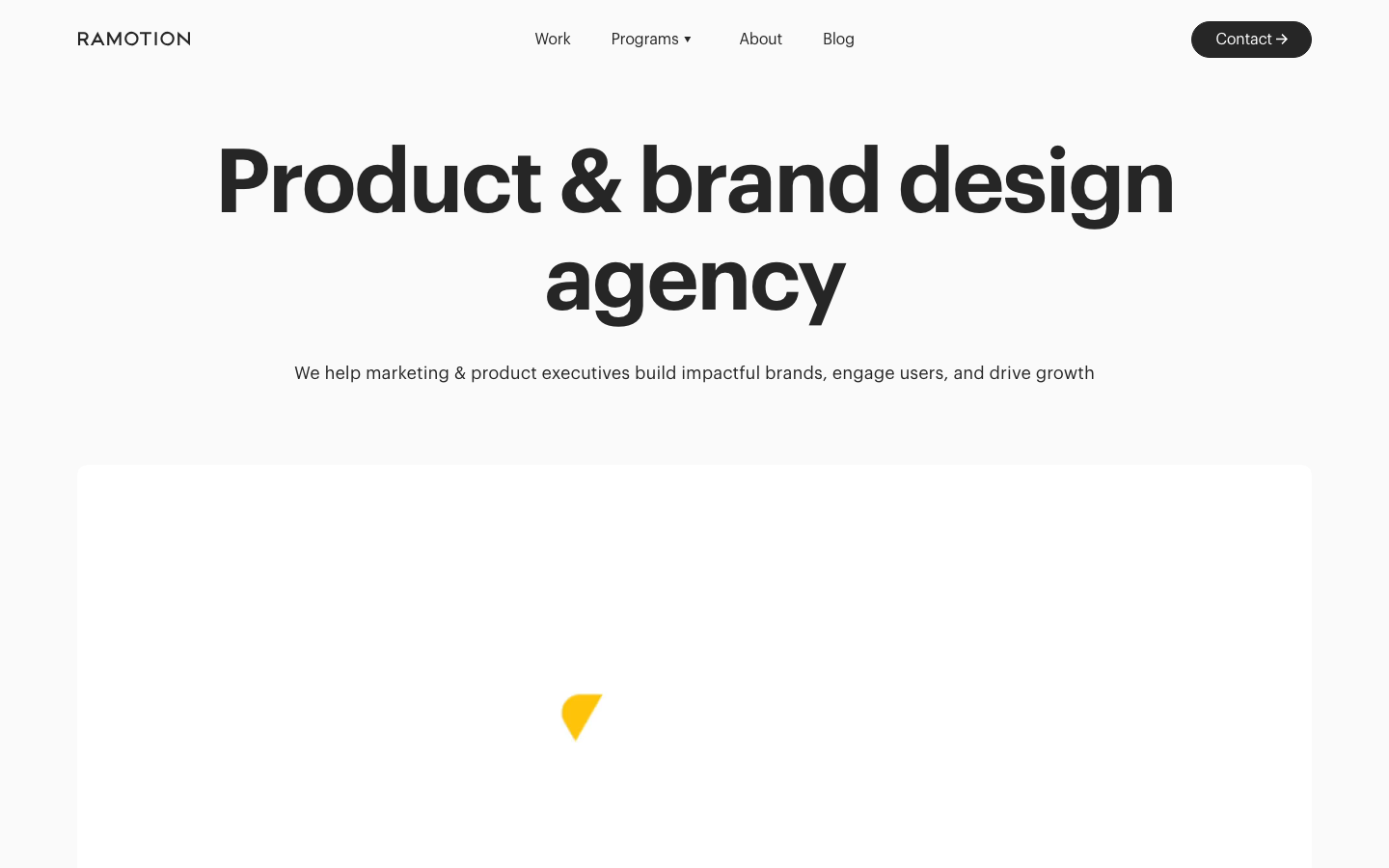
Screenshot of the Ramotion homepage
Ramotion logo

Ramotion

San Francisco, CA, USA

Team size

10–49 employees (Clutch)

Founded

2009

Min. engagement

$50,000+ minimum project size

Rate

$150–$199/hr

3

Ramotion

8.9/10

Weighted score

Ramotion runs a lean San Francisco studio (10-49 people per Clutch, three offices across SF, LA, and New York) with a client roster that includes Netflix, Stripe, and Mozilla Firefox, and a 4.9/5 Clutch rating across 29 reviews. Its focus on fintech, cybersecurity, and B2B/SaaS branding makes it a close second to Bricx Labs on specialization, though its $50,000+ minimum and $150-$199/hr rate sit meaningfully above Bricx's entry point. Rebrand and design-system work is its strongest category; if the job is narrowly a marketing-site redesign rather than a full identity system, the premium is harder to justify.

Best for: Fintech and cybersecurity SaaS companies that need a rebrand alongside the website

Design taste9.3
Conversion9.0
Specialization8.8
Team depth8.4

Specialties

Brand strategy & identityWeb designUI/UX designDesign systemsWeb app development

Verified clients

Netflix, Stripe, Mozilla Firefox, Adobe, Okta, Turo, Salesforce, Crunchbase

Pricing model

Fixed-fee projects scoped after a paid discovery phase

Why it's here: Ramotion pairs brand strategy with web app development and a design-systems practice, which is the combination you want when the redesign has to produce a system the marketing team keeps building on rather than a fixed set of finished pages.

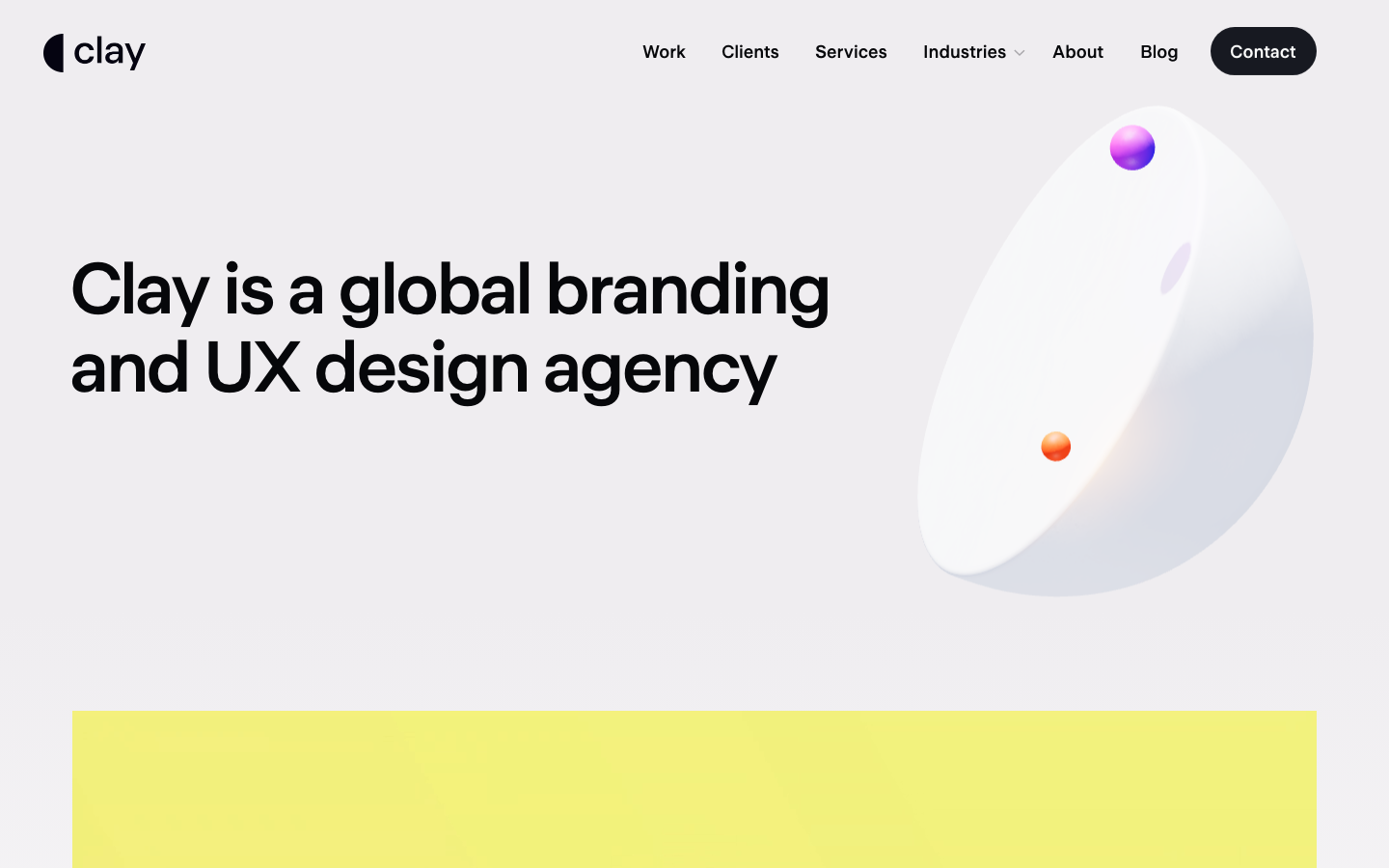
Screenshot of the Clay homepage
Clay logo

Clay

San Francisco, CA, USA

Team size

~78 employees (own site); Clutch bands 10–49

Founded

2009 (per Clutch; sources vary 2008–2016)

Min. engagement

$50,000+ minimum project size

Rate

$150–$199/hr

4

Clay

8.3/10

Weighted score

Clay is a San Francisco branding and UX studio with an enterprise client list, Meta, Google, Stripe, Coinbase, and a 4.8/5 Clutch rating across 32 reviews. It runs a remote-first team it describes on its own site as 78 people, though Clutch's banded estimate (10-49) and third-party trackers disagree, a common mismatch at this size of firm. Clay's breadth (branding, product design, generative-AI integration, content production) makes it a strong generalist pick, but that breadth is also why it scores lower than Bricx Labs and Ramotion on specialization: it is not built specifically around funded SaaS go-to-market sites the way this list's top two entries are.

Best for: Companies that want branding and website design bundled into one engagement

Design taste9.0
Conversion8.3
Specialization7.6
Team depth8.2

Specialties

UX/UI designBrand identityWebsite design & developmentDesign systems

Verified clients

Meta, Google, Stripe, Coinbase, Uber, Slack, Amazon, Cisco

Pricing model

Time & materials, fixed fee, or retainer, scoped after discovery

Why it's here: Clay lists website design and development alongside brand identity, so it can run a rebrand and a site rebuild as one engagement. Its $50,000 minimum and San Francisco rate card put it in reach of funded companies rather than early-stage teams.

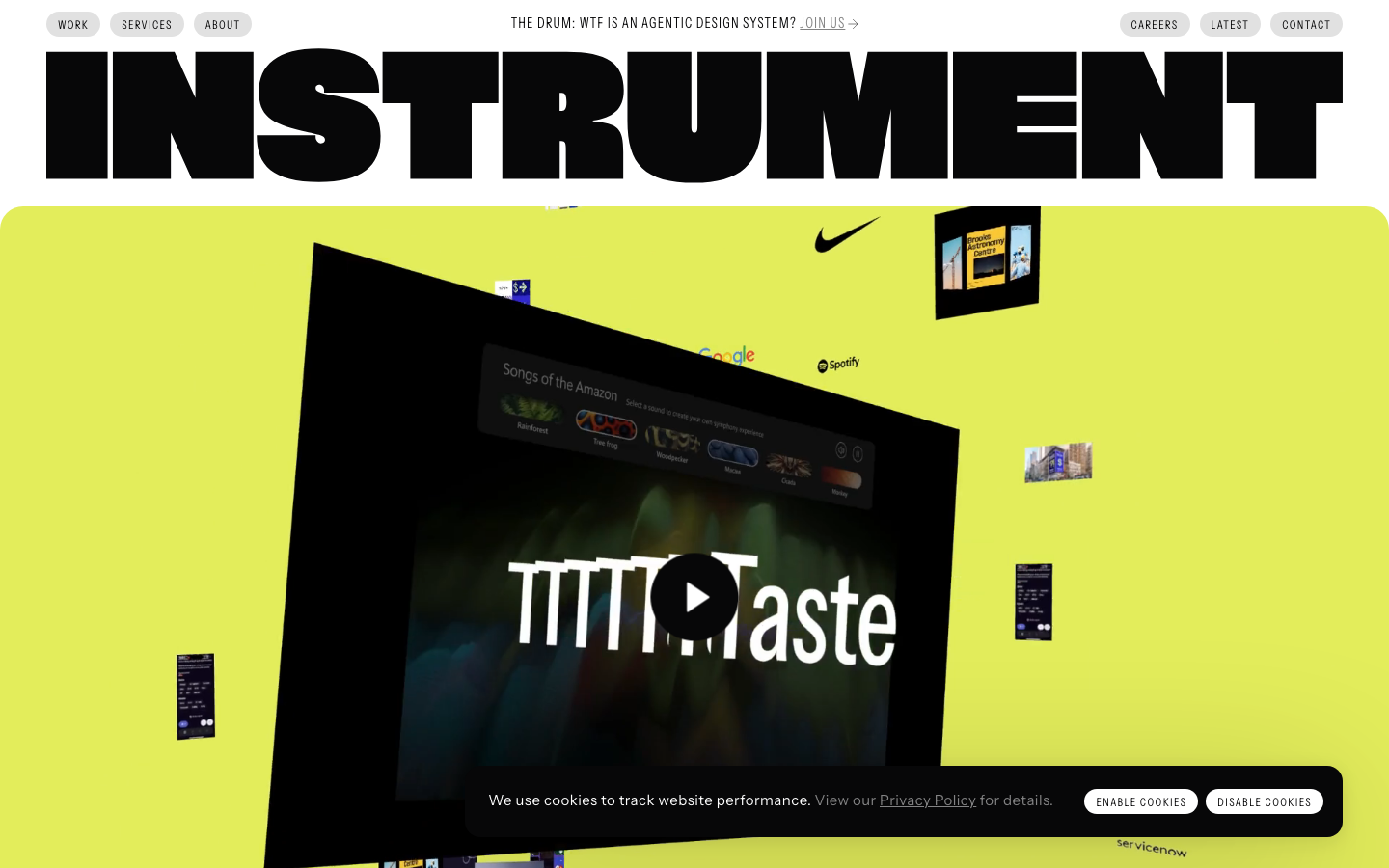
Screenshot of the Instrument homepage
Instrument logo

Instrument

Portland, OR, USA

Team size

350+ employees (own site); Clutch bands 250–999

Founded

2002 (per Clutch)

Min. engagement

$250,000+ minimum project size

Rate

$200–$300/hr

5

Instrument

8.4/10

Weighted score

Instrument is a Portland-founded, technology-led brand agency (part of the Trisect/MDC group) whose client list, Google, Spotify, EA, Nike, reads like a Super Bowl ad roster rather than a SaaS reference list. Design execution is genuinely top-tier, but a $250,000+ minimum project size and $200-$300/hr rate put it well outside what most Series A-C software companies budget for a website, and its Clutch profile shows no reviews yet despite the listing being active. Instrument is built for global consumer brand campaigns; a funded SaaS company is more likely to be a rounding error in its client mix than a priority account.

Best for: Series D+ or public companies with an enterprise brand-campaign budget

Design taste9.4
Conversion8.1
Specialization6.8
Team depth9.0

Specialties

Brand strategyProduct designMarketing & digital strategyVideo production

Verified clients

Google, Spotify, Electronic Arts, ServiceNow, Uber, Oura, Nike, Stripe

Pricing model

Enterprise retainers and large fixed-scope engagements

Why it's here: Instrument does the largest redesigns in this ranking, for Nike and Google-scale brands, with dedicated video production attached. Its $250,000 minimum project size makes it the wrong shape for anything below an enterprise brand relaunch, which is why it ranks last on a page about redesigns rather than about prestige.

Frequently asked questions

Which agency is best for a website redesign?+
Webstacks, on the criteria that matter for a redesign specifically. It is the only agency in our ranking naming both conversion rate optimization and technical SEO as specialties, and its headless CMS work is built for marketing teams that need to publish without engineering. Bricx Labs is the stronger choice when the redesign also involves a new brand and needs the front-end built.
How is a redesign different from a new website build?+
On a redesign you already have traffic, rankings, a CMS, and a conversion rate someone owns. The failure modes are losing rankings through a bad migration, converting worse than the old site, and handing marketing a CMS they cannot update. A first build has none of those constraints, which is why an agency that is excellent at one is not automatically good at the other.
Will a redesign hurt my search rankings?+
It can, and the migration plan is what decides it: URL mapping and redirects, preserved metadata and structured data, and no accidental noindex on the new templates. Webstacks is the only agency in our ranking that names technical SEO as a specialty, which is the single most relevant credential on this page if organic traffic is a meaningful channel for you.
What should a website redesign cost?+
Published minimums among the agencies on this page run from $10,000 at Webstacks and $25,000 at Bricx Labs to $50,000 at Ramotion and Clay and $250,000 at Instrument. Those are floors rather than typical totals. A redesign with research, a design system, a CMS build, and a migration plan will run well above the minimum at any of them.
Which agencies were left off this page?+
Work & Co and Fantasy. Neither names website, CMS, or conversion work among its published specialties: Work & Co sells digital product design, product strategy and management, engineering, and growth; Fantasy sells AI strategy, product design, brand, and innovation consulting. Both appear on the full ranking.